Lanza Featured in OMNI MAGAZINE’s Collector’s Edition
Thursday, January 28th, 2021
Omni Magazine is back. Featured story:
Building Doctor Who’s Time Machine
What if you could travel through time just like you navigate space? The journey starts here
Omni Magazine is back. Featured story:
Building Doctor Who’s Time Machine
What if you could travel through time just like you navigate space? The journey starts here
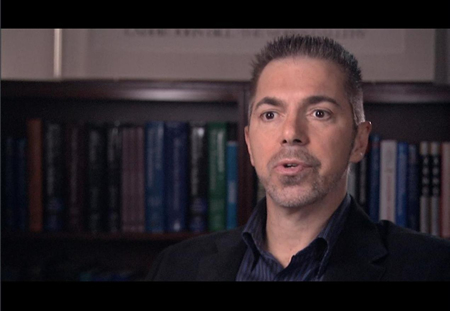
Stem cell pioneer Robert Lanza has been on the frontier of cloning and stem cells for more than a decade, so he’s well-acclimated to controversy. But his book “Biocentrism” is generating controversy on a different plane. Does all this make a difference in daily life, or how you see the world? Take a look at the free sample of “Biocentrism.”
“One of the finest & best current books I have read on the subject of human “consciousness.” Lanza is a genius of first magnitude … When they write the list of this Century’s most important books, you can bet the farm this title will be near the top.”
‒ Robert Steven Thomas TOP 500 REVIEWER, Amazon.com

Rethinking Our Insanely Improbable Universe
Speaking with the authority of a distinguished scientific career, Robert Lanza presents the case for abandoning the "dumb universe" paradigm…
Robert Lanza on Theory of Biocentrism
Lanza’s talk on biocentrism at the Science and Nonduality Conference.
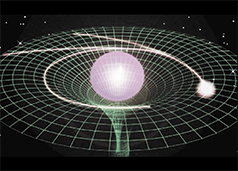
Robert Lanza – What are Space and Time?
Robert Lanza talks about the fundamental assumptions in science about space and time
Introducing the Biocentric Universe
An intriguing theory may help answer some of the biggest questions in science.
[Read the article]

It’s All Relative
Some physicists believe that all objects must be described only in terms of other things, an idea that goes back to Einstein. This is the key to understanding Lanza’s theory
[Read the article]
Robert Lanza Discusses His ‘Biocentric’ View of the Universe
Scientist and renegade thinker Robert Lanza discusses his ‘biocentric’ view of the universe with Art Bell
The Afterlife Dysfunction
AtheneWins’ new documentary on YouTube (Biocentrism starts midway).
Biocentrism: Our Consciousness Creates the Universe
Robert Lanza claims the theory of biocentrism says death is an illusion.

Does Death Exist?
New theory says ‘no.’

Death is Only the Beginning
If death doesn’t exist, then what happened to your dog?

Why Does Life Exist?
Life sings because it has a song
—the meaning is in the lyrics.
Why Are You Here?
Biocentrism holds the missing piece
Does The Past Exist Yet?
Experiments suggest your past isn’t set in stone.
What Happens When You Die?
Evidence suggests time simply reboots.
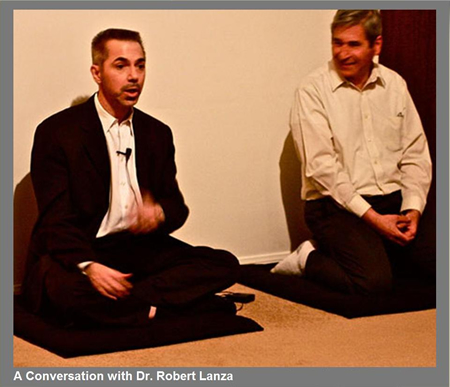
“Sitting on Top of Infinity” Listen to an excerpt from Dr. Robert Lanza’s recent talk at the Hazy Moon Zen Center.
An interview with the author of Biocentrism, a book that Nyogen Roshi (the last authorized disciple of Taizan Maezumi Roshi, the foremost Zen master of the twentieth century) describes as mirroring his experiences in the practice of zazen as closely as anything he has encountered in a modern writer.

“My special guest is Dr. Robert Lanza and his extraordinary mind, I just finished reading his book Biocentrism and I said to myself, ‘Finally, aha, somebody that I can totally relate to.’”
“Deepak Chopra”
“TIME Magazine: Top 100 Icons of the Century”
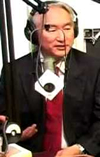
“To give us a glimpse about some of the big breakthroughs that were made in biotechnology, we have Dr. Robert Lanza of Advanced Cell Technology. He is one of the leading scientists making breakthroughs in this fast moving field.”
“Dr. Michio Kaku”
“Professor of Theoretical Physics and Co-Founder of String Theory”


“Art Bell welcomed renegade thinker and scientist, Robert Lanza, who discussed how life and consciousness are essential to the existence of our universe.”
“Dr. Robert Lanza joined George Knapp to talk about how death is not the final end most of us imagine.”
“The Universe in Your Head”
“Stem cell pioneer Robert Lanza generates controversy on a whole different plane with ‘Biocentrism,’ a book that lays out his theory of everything.”
Alan Boyle, MSNBC’s Science Editor
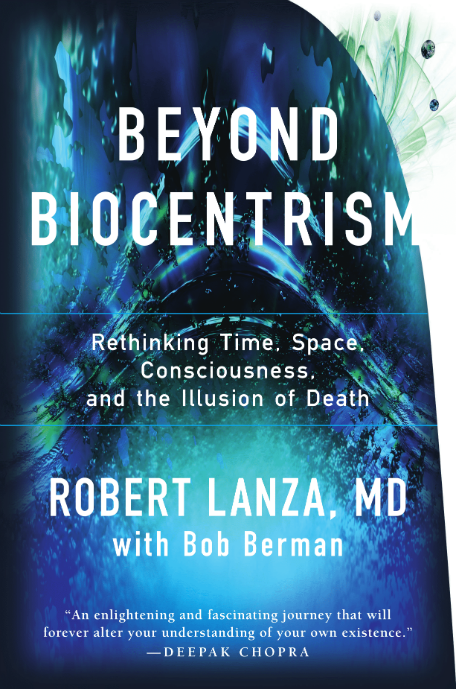
BEYOND BIOCENTRISM
Rethinking Time, Space, Consciousness, and the Illusion of Death
Biocentrism shocked the world with a radical rethinking of the nature of reality … but that was just the beginning.
“One of the most interesting books to cross my desk this summer was Biocentrism, written by Dr. Robert Lanza, who is probably best known for his groundbreaking work with stem cells. The book is an out-and-out challenge to modern physics. I found the attack on physics to be pretty compelling”
Eric Berger, Science Editor at the HOUSTON CHRONICLE

Excerpt from the interview with Robert Lanza featured in “Science and Nonduality”
Robert Lanza’s talk on biocentrism at the “Science and Nonduality” Conference
“The whole of Western natural philosophy is undergoing a sea change again, forced upon us by the experimental findings of quantum theory.” — Robert Lanza
The world, it turns out, isn’t the hard, cold place we imagine waking up to in the morning. We scientists are only beginning to pierce the surface of reality.
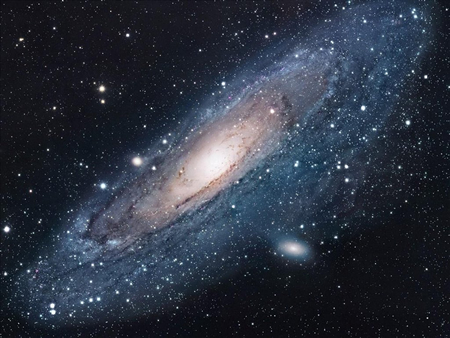
What came first, you or the universe? The answer is not only unsettling, but suggestive of something both mysterious and inescapable: that you’re the template for the universe and the laws of nature themselves.
We go to and fro our little affairs on an insignificant little planet orbiting an insignificant little sun. Scientists tell us that the universe doesn’t care if we—the little creatures who inhabit this earth—are alive or dead. But there’s a problem with this view—a big problem.
BEYOND BIOCENTRISM: Rethinking Time, Space, Consciousness, and the Illusion of Death
Host Paul Kennedy has his understanding of reality turned-upside-down by Dr. Robert Lanza in this paradigm-shifting hour. Dr. Lanza provides a compelling argument for consciousness as the basis for the universe, rather than consciousness simply being its by-product.

“… Robert Lanza’s work is a wake-up call to all of us”
—David Thompson, Astrophysicist, NASA’s Goddard Space Flight Center
“The heart of [biocentrism], collectively, is correct…So what Lanza says in this book is not new. Then why does Robert have to say it at all? It is because we, the physicists, do NOT say it–or if we do say it, we only whisper it, and in private–furiously blushing as we mouth the words. True, yes; politically correct, hell no! Bless Robert Lanza for creating this book, and bless Bob Berman for not dissuading friend Robert from going ahead with it…Lanza’s remarkable personal story is woven into the book, and is uplifting. You should enjoy this book, and it should help you on your personal journey to understanding.”
—Richard Conn Henry, Professor of Physics and Astronomy, Johns Hopkins University
“It is genuinely an exciting piece of work…and coheres with some of the things biology and neuroscience are telling us about the structures of our being. Just as we now know that the sun doesn’t really move but we do (we are the active agents), so it is suggesting that we are the entities that give meaning to the particular configuration of all possible outcomes we call reality.”
—Ronald Green, Eunice & Julian Cohen Professor and Director, Ethics Institute, Dartmouth College
“[Biocentrism] takes into account all the knowledge we have gained over the last few centuries…placing in perspective our biologic limitations that have impeded our understanding of greater truths surrounding our existence and the universe around us. This new theory is certain to revolutionize our concepts of the laws of nature for centuries to come.”
—Anthony Atala, renowned scientist, W.H. Boyce Professor, Chair, and Director of the Institute for Regenerative Medicine, Wake Forest University School of Medicine
“Having interviewed some of the most brilliant minds in the scientific world, I found Dr. Robert Lanza’s insights into the nature of consciousness original and exciting. His theory of biocentrism is consistent with the most ancient traditions of the world which say that consciousness conceives, governs, and becomes a physical world.”
—Deepak Chopra, Bestselling Author, one of the top heroes and icons of the century
“It’s a masterpiece…combines a deep understanding and broad insight into 20th century physics and modern biological science; in so doing, he forces a reappraisal of this hoary epistemological dilemma…Bravo”
—Michael Lysaght, Professor and Director, Center for Biomedical Engineering, Brown University
“Now that I have spent a fair amount of time the last few months doing a bit of writing, reading and thinking about this, and enjoying it and watching it come into better focus, And as I go deeper into my Zen practice, And as I am about half way through re-reading Biocentrism, My conclusion about the book Biocentrism is: Holy shit, that’s a really great book!
—Ralph Levinson, Professor, University of California, Los Angeles
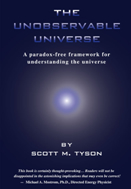
“I downloaded a digital copy of [Biocentrism] in the privacy of my home, where no one could observe my buying or reading such a “New Agey” sort of cosmology book. Now, mind you, my motivation was not all that pure. It was my intention to read the book so I could more effectively refute it like a dedicated physicist was expected to. I consider myself to be firmly and exclusively entrenched in the cosmology camp embodied by the likes of Stephen Hawking, Lisa Randall, Brain Greene, and Edward Witten. After all, you know what Julius Caesar said: Keep your friends close and your enemies closer.” I needed to know what the other camps were thinking so I could better defend my position. It became necessary to penetrate the biocentrism camp.
The book had the completely opposite effect on me. The views that Dr. Lanza presented in this book changed my thinking in ways from which there could never be retreat. Before I had actually finished reading the book, it was abundantly obvious to me that Dr. Lanza’s writings provided me with the pieces of perspective that I had been desperately seeking. Everything I had learned and everything I thought I knew just exploded in my mind and, as possibilities first erupted and then settled down, a completely new understanding emerged. The information I had accumulated in my mind hadn’t changed, but the way I viewed it did— in a really big way.”
Source: Wired.com
“The answer to the universe is biology — it’s as simple as that,” says Dr. Robert Lanza, vice president of research and scientific development at Advanced Cell Technology.
A New Theory of the Universe: Biocentrism builds on quantum physics by adding life to the equation.
The American Scholar

A new theory asserts that biology, not physics, will be the key to unlocking the deepest mysteries of the universe.
WIRED.com

How biology is central to constructing a more complete and unified theory of the Universe
The Scientist

Rethinking Time, Space, and the Nature of the Universe.
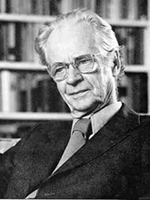
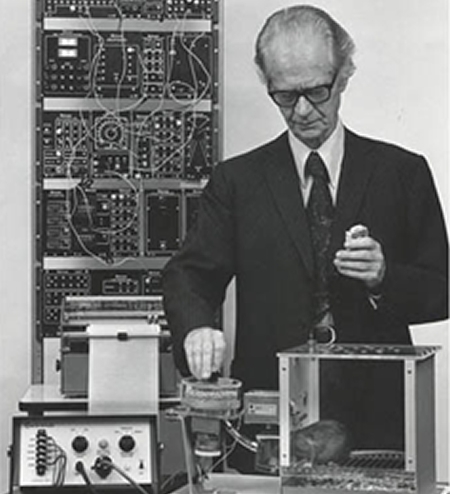
Most Influential Psychologist of All Time
―American Psychological Association
SCIENCE 207; 543 (1980)
Lanza (with Skinner & Epstein)
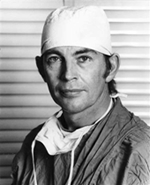
Performed the World’s First Heart Transplant
New England Journal of Medicine 307; 1275 (1982)
Lanza (with Barnard & Cooper)
JAMA 249; 1746 (1983)
Lanza (with Barnard, Cooper & Cassidy)
American Heart Journal 107; 8 (1984)
Lanza (with Barnard, Cooper & Boyd)
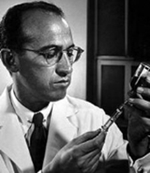
Developed Polio Vaccine
J. Supramol. Struct 182;33 (1979)
Lanza (with Salk)
Robert Lanza featured on Barbara Walter’s
ABC Special “Live to be 150. Can you do it?”

The quest to unify all of physics into a “the theory of everything” has inspired a host of ideas. Now a pioneer in the field of stem cell research has weighed in with an essay that brings biology and consciousness into the mix.
MSNBC.com Cosmic Log
Biocentrism (theory of everything) from Greek: βίος, bios, “life”; and κέντρον, kentron, “center” — also known as the biocentric universe — is a theory proposed in 2007 by American scientist Robert Lanza. In this view, life and biology are central to being, reality, and the cosmos. Biocentrism asserts that current theories of the physical world do not work, and can never be made to work, until they fully account for life and consciousness. – From WIKIPEDIA Read More
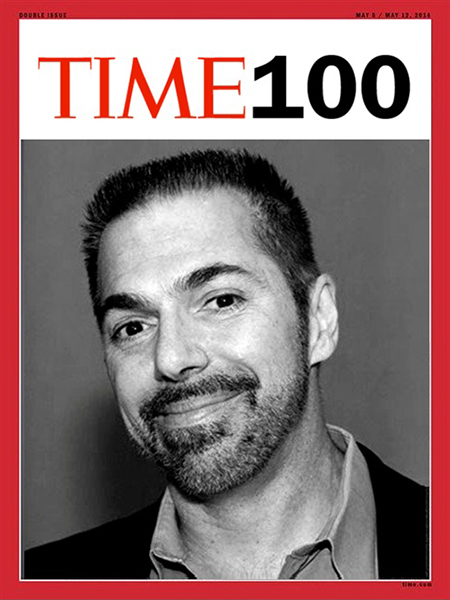
Dr. Robert Lanza selected for the 2014 TIME 100 list of the hundred most influential people in the world, along with Beyoncé, Hillary Clinton, Pope Francis, Vladimir Putin, Robert Redford, and other artists, pioneers, leaders, titans and icons.
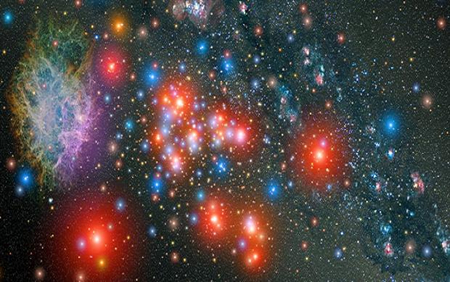
The Biocentric Universe Theory: Stem-cell guru Robert Lanza presents a radical new view of the universe and everything in it.
Discover Magazine

The Biocentric Universe Theory: Stem-cell guru Robert Lanza presents a radical new view of the universe and everything in it.
Discover Magazine
The Biocentric Universe Theory: Stem-cell guru Robert Lanza presents a radical new view of the universe and everything in it.
Discover Magazine
The theory that blew your mind in Biocentrism and Beyond Biocentrism is back, with brand-new research revealing the startling truth about our existence.
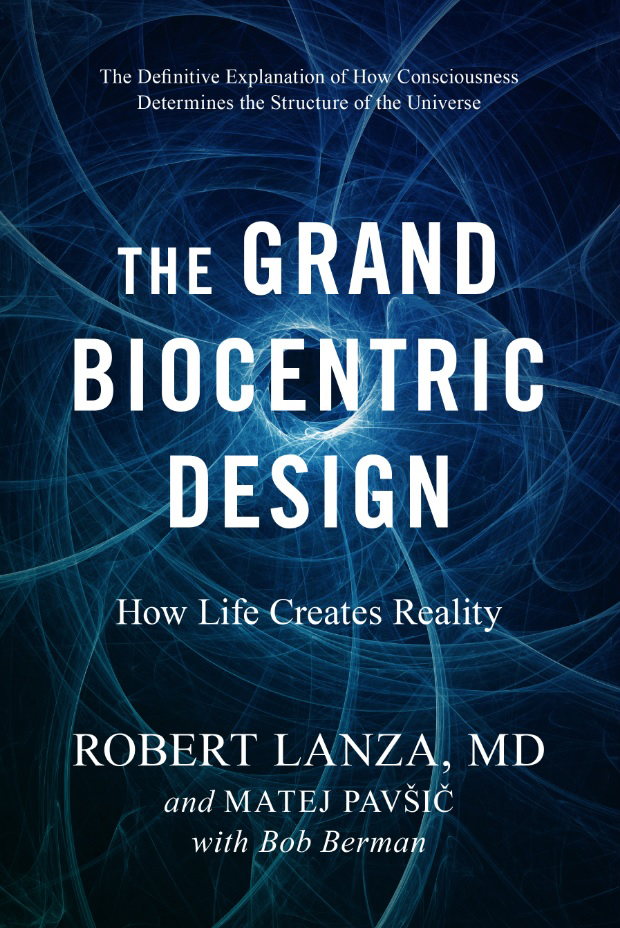
What is consciousness? Why are we here? Where did it all come from? All of it, the laws of nature, the stars, the universe. Humans have been asking these questions forever, but science hasn’t succeeded in providing many answers – until now. In The Grand Biocentric Design, Robert Lanza, one of Time Magazine’s “100 Most Influential People,” is joined by theoretical physicist Matej Pavsic and astronomer Bob Berman to shed light on the big picture that has long eluded philosophers and scientists alike.
The Grand Biocentric Design is a one-of-a-kind, groundbreaking explanation of how the universe works, and an exploration of the science behind the astounding fact that time, space, and reality itself, all ultimately depend on us.
“quite thrilling … its notions are exciting ones, and they do a sound job of linking them to observable, replicable experiments. Fans of revolutionary science—or just big, cerebral questions—will enjoy this ambitious work. A thought-provoking dispatch from the frontier of physics.” —Kirkus Reviews
“a masterpiece”—Anthony Atala, W. Boyce Professor, Wake Forest University
“paradigm-shattering”―Lucian Del Priore, Robert R. Young Professor, Yale University
“It’s fabulous—I couldn’t put it down!” —Ralph Levinson, Professor Emeritus, UCLA
All human knowledge is relational. “Discordant opinions,” said Emerson “are reconciled by being seen to be two extremes of one principle.”

Stem cell pioneer Robert Lanza has been on the frontier of cloning and stem cells for more than a decade, so he’s well-acclimated to controversy. But his book “Biocentrism” is generating controversy on a different plane. Does all this make a difference in daily life, or how you see the world? Take a look at the free sample of “Biocentrism.”
Dr. Robert Lanza selected for the 2014 TIME 100 list of the hundred most influential people in the world, along with Beyoncé, Hillary Clinton, Pope Francis, Vladimir Putin, Robert Redford, and other artists, pioneers, leaders, titans and icons.
Robert Lanza selected as one of the top “World Thinkers 2015” by Prospect Magazine. The thinkers were chosen for “engaging in original and profound ways with the central questions of the world today,” as well as for their continuing significance for “this year’s biggest questions” (in economics, science, philosophy, cultural and social criticism and in politics).
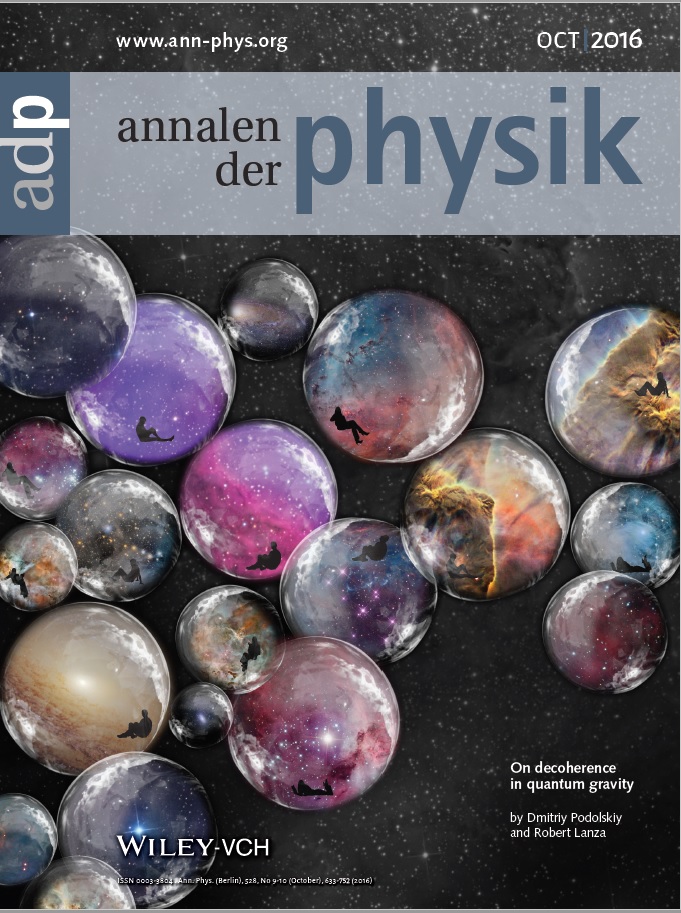
In his papers on relativity, Einstein showed that time was relative to the observer. This new paper takes this one step further, arguing that the observer creates it. The paper shows that the intrinsic properties of quantum gravity and matter alone cannot explain the tremendous effectiveness of the emergence of time and the lack of quantum entanglement in our everyday world. Instead, it’s necessary to include the properties of the observer, and in particular, the way we process and remember information.
Picture of Robert Lanza at Hazy Moon

Both science and religion appear to be honing in on a deeper reality, one totally ignored by most people until now.
Picture of Robert Lanza and Barbara Walters
Picture of Robert Lanza
Picture of Robert Lanza

Everyone knows that something is screwy with the way we visualize the cosmos. Theories of its origins screech to a halt when they reach the very event of interest — the moment of creation, the “Big Bang.”

We suppose ourselves to be a pond; and if there is any justice, it must approach upon these shores. But there are consequences to our actions that transcend our ordinary, classical way of thinking.

In Star Wars, the bars are bustling with alien creatures. But where are they all? Despite half a century of scanning the sky, astronomers have failed to find any evidence of life.

It appears increasingly likely that our universe is not a closed system and that science may not be playing with a full deck.

If we could see before the first single-cell organism, and after the last man and woman, only you would remain — you, the Great Face behind, that consciousness whose mode of thinking that contains the world.

Why out of all of existence do you get to be, say, just a plumber or a hairdresser — followed by nothingness for the rest of eternity.
Picture of Robert Lanza
Picture of Robert Lanza from Wired Magazine

We think of time and consciousness in human terms. But like us, plants possess receptors, microtubules and sophisticated intercellular systems that likely facilitate a degree of spatio-temporal consciousness.

Where did it all come from? Why are we here? Switching our perspective from physics to biology undoes some of the biggest “facts” we’ve been taught about the world.

Can life really be reduced to the laws of physics, or are we part of something more noble and triumphant?

An amazing set of experiments suggest that events in the future may influence things happening in the world now. The past, present and future are inseparably entangled.

A long list of scientific experiments suggests our belief in death is based on a false premise. This article provides five compelling reasons why you won’t die.

Evolutionary biology suggests life has progressed from a one dimensional reality, to two dimensions to three dimensions, and there’s no reason to think the evolution of life stops there.

All human knowledge is relational. “Discordant opinions,” said Emerson “are reconciled by being seen to be two extremes of one principle.”

Life is more than just the dance of atoms described in our science textbooks. We’re all ephemeral forms of an individuality greater than ourselves, eternal even when we die.

We dismiss dreams because they end when we wake up. But whether awake or dreaming, you’re experiencing the same bio-physical process.

The contemplation of time and the discoveries of modern science suggest that the mind is the ultimate reality, paramount and limitless.

Einstein believed he could build from one side of nature — the physical, without the other side — the living. But he was a physicist, and as such, missed what was outside his window.

Ideally, our concepts of nature and God should adapt to our evolving scientific knowledge. Relative to the supreme creator, we humans would be much like the microorganisms we scrutinize under the microscope.

New experiments suggest part of us exists outside of the physical world. We assume there’s a universe “out there” separate from what we are, and that we play no role in its appearance. Yet experiments show just the opposite.

It seems natural that someday we’ll make machines that’ll think and act like people. However, for a machine or computer there’s no other principle but physic, and the chemistry of the atoms that compose it.

What happens if we project our current scientific knowledge into the future? A new scenario suggests the evolution of a new concept of God.

Experiments suggest life cannot be destroyed. According to Biocentrism, consciousness can’t be extinguished in a timeless, spaceless world.

We’re taught that the universe can be fundamentally divided into two entities: ourselves and that which is outside of us. But you’re not an object — if you divorce one side of the equation from the other you cease to exist.

Life is a flowering and adventure that transcends our ordinary linear way of thinking, an interlude in a melody so vast and eternal that human ears can’t appreciate the tonal range of the symphony.

We take physics as a kind of magic and think everything just popped into existence one day out of nothingness. But we’re living through a profound shift in worldview, from the belief that life is an insignificant part of the physical universe, to one in which we’re the origin.

We’re about to be broadsided by the most explosive event in history. But it won’t be rockets that take us the next step. Sometime in the future science life will finally figure out how to escape from its corporeal cage.

What sustains us in and above the void of nothingness? We can’t see the laws that uphold the world, and that if they be removed the Universe would collapse to nothing.

Did you ever wonder why people like Elvis Presley and Michael Jackson didn’t fare any better than you or I despite all their money, fame, and access to people of wisdom? The answer lies in your own backyard.

Biocentrism unlocks the cage Western science has unwittingly confined itself. By allowing the observer into the equation opens new approaches to understanding everything from the tiny world of the atom to our views of life and death.
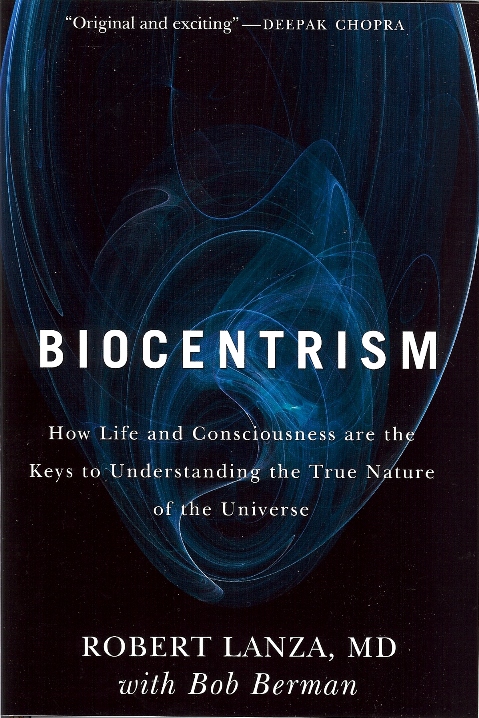
BIOCENTRISM
How Life and Consciousness are the Keys to Understanding the True Nature of the Universe
“Any short statement does not do justice to such a scholarly work.”
Nobel Prize Winner E. Donnall Thomas, referring to Lanza’s A New Theory of the Universe
The Biocentric Universe Theory: Stem-cell guru Robert Lanza presents a radical new view of the universe and everything in it.
Discover Magazine
Source: Msnbc.com
Robert Lanza, vice president for research and scientific development at Advanced Cell Technology, sets forth his view on the quest for a unified cosmic theory in “A New Theory of the Universe,” an essay appearing in The American Scholar.
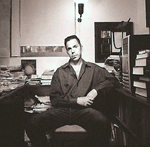
I spent a couple of years rolling pennies and eating canned spinach and pasta while I tried to understand the universe.

From Wikipedia: The h-index measures both the productivity and impact of a scientist or scholar. A value for h of about 12 might be typical for advancement to tenure (associate professor) at major [US] research universities. A value of about 18 could mean a full professorship, 15–20 could mean a fellowship in the American Physical Society, and 45 or higher could mean membership in the United States National Academy of Sciences. According to Hirsch (who put forward the h-index), an h index of 20 is good, 40 is outstanding, and 60 is truly exceptional.
“…his mentors described him [Lanza] as a “genius,” a “renegade” thinker, even likening him to Einstein.”
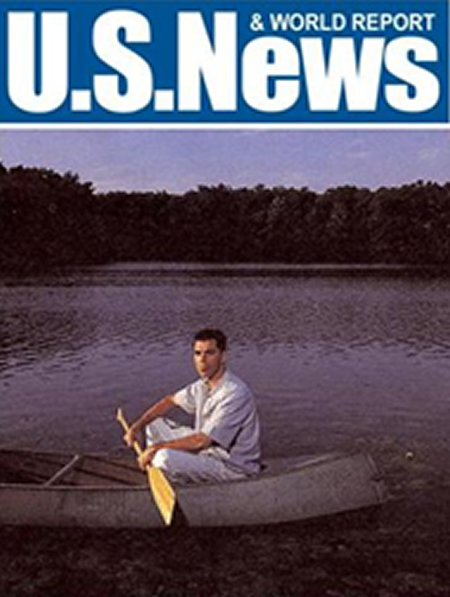
“Robert Lanza is the living embodiment of the character played by Matt Damon in the movie Good Will Hunting. Growing up underprivileged in Stoughton, Mass., south of Boston, the young preteen caught the attention of Harvard Medical School researchers when he showed up on the university steps having successfully altered the genetics of chickens in his basement. Over the next decade, he was to be “discovered” and taken under the wing of scientific giants such as psychologist B. F. Skinner, immunologist Jonas Salk, and heart transplant pioneer Christiaan Barnard. His mentors described him as a “genius,” a “renegade” thinker, even likening him to Einstein.”

Experiments suggest we create time, not the other way around. Life is just one fragment of time, one brushstroke in a picture larger than ourselves, eternal even when we die.

The mystery of life and death cannot be examined by visiting the Galapagos or looking through a microscope. Even Einstein realized this isn’t the case.
Robert Lanza is an American scientist and author whose peer-reviewed research spans the sciences, from biology and cognitive science to theoretical physics. TIME magazine recognized him as one of the “100 Most Influential People in the World,” and Prospect magazine named him one of the “Top 50 World Thinkers.” A U.S. News & World Report …